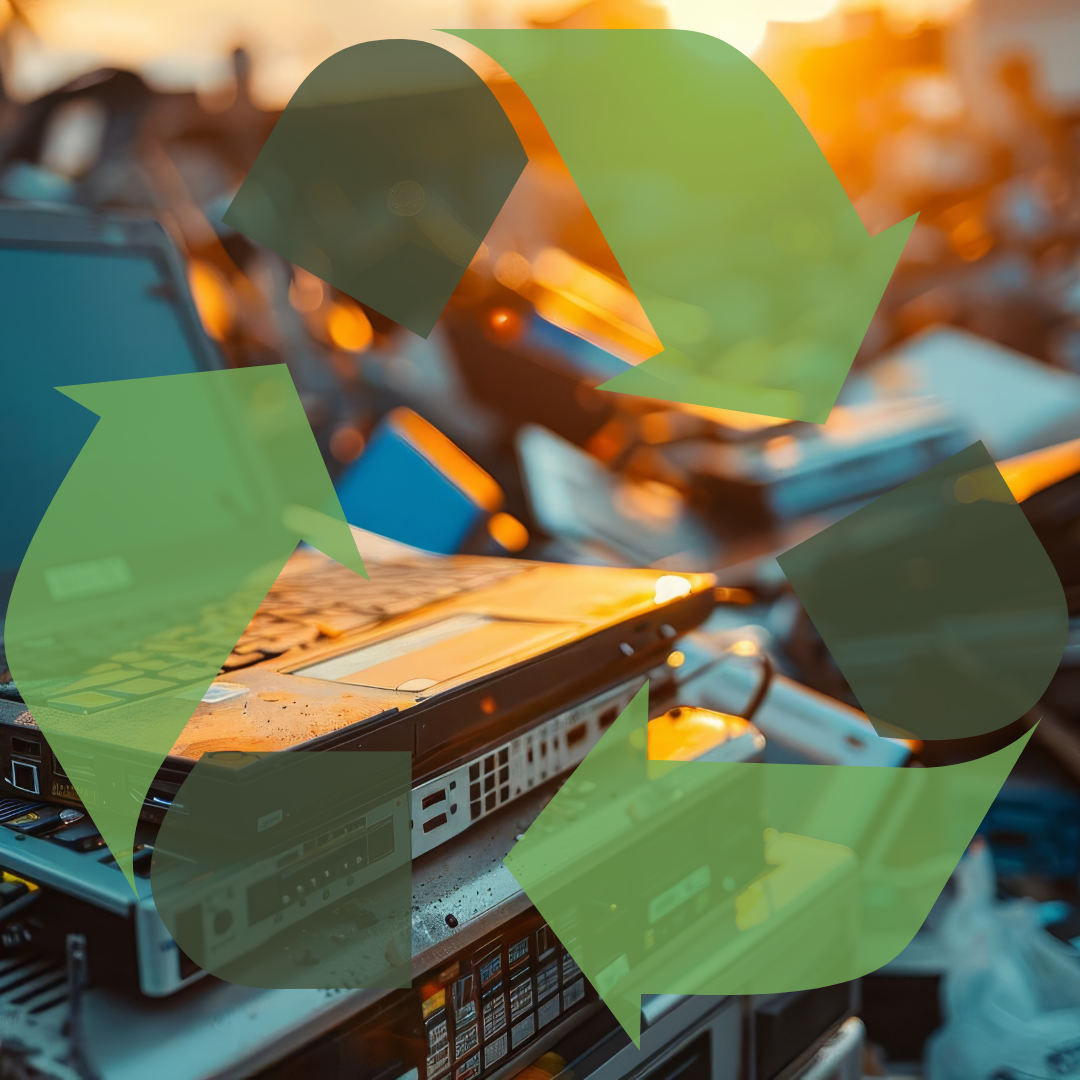
Electronic waste (or e-waste) is one of the fastest-growing waste streams in Canada. Between rapid tech upgrades, hybrid work environments, and increasingly short product lifecycles, organizations are generating more used devices than ever. Yet many workplaces still send electronics to landfill due to limited awareness, inconvenient recycling options, or uncertainty around secure data destruction.
Proper e-waste recycling is critical for environmental protection, regulatory compliance, and corporate responsibility. Here’s why it matters and how your organization can improve its e-waste recycling efforts.
What Counts as Electronic Waste?
E-waste refers to any device with a plug, battery, or cord that is no longer wanted or working. In a business setting, this includes a wide range of items:
- Computers, laptops, monitors
- Cell phones and tablets
- Printers, photocopiers, and toner cartridges
- Keyboards, mice, chargers, and cables
- Televisions and AV equipment
- Office kitchen appliances (microwaves, kettles, mini-fridges)
Many electronic devices also contain hazardous materials, such as mercury, cadmium, lithium-ion batteries, and leaded glass, making responsible recycling essential.
Why Electronic Waste Recycling Is So Important
1. Environmental Protection
Electronics contain toxic materials that can leach into soil and waterways when sent to landfill. Proper recycling prevents harmful chemicals from entering the environment and helps recover valuable metals like gold, copper, aluminum, and rare earth elements. Reusing these materials reduces the need for resource-intensive mining and lowers greenhouse gas emissions.
2. Economic and Operational Benefits
Organizations can reduce disposal costs by diverting electronics into recycling streams rather than using regular waste bins. High-value components can also generate rebates or offset recycling costs. Ultimately, efficient e-waste management contributes to a circular economy, which helps keep materials in use and reduces overall waste.
3. Compliance and Risk Reduction
Canadian organizations must follow provincial regulations and extended producer responsibility (EPR) requirements related to electronic waste. Improper disposal can lead to penalties and unnecessary risk. Recycling electronics ensures compliance while mitigating data-security threats, since many devices store sensitive information.
4. Stronger ESG Performance and Brand Reputation
Sustainability has become a key pillar for corporate responsibility. Improving e-waste recycling supports ESG goals, demonstrates leadership, and builds trust with customers, employees, and stakeholders who prioritize environmental stewardship.
5. Avoid Contamination and Unexpected Fees
It’s important to note that electronic waste should never be placed in regular garbage or recycling bins. Doing so is considered contamination, which can result in rejected loads, processing issues, and potential additional fees. To avoid these risks and ensure electronics are handled responsibly, e-waste should always be kept separate and disposed of through designated eco stations or approved recycling programs. Proper separation not only prevents contamination but also ensures your organization fully benefits from compliant, environmentally responsible e-waste recycling.
Common Barriers to E-Waste Recycling
Despite the benefits, many organizations still struggle with e-waste diversion due to:
- Limited awareness of what can be recycled
- Inconvenient drop-off or pick-up options
- Unclear internal roles and responsibilities
- Data protection concerns
- Lack of a standardized, company-wide process
Overcoming these challenges starts with building a simple, accessible program supported by the right partners.
Practical Ways to Boost Electronic Waste Recycling
1. Partner With a Full-Service Recycling Provider
Managing electronics across multiple locations, or even a single office, can be complex. A full-service waste and recycling partner like Waste Logic simplifies the entire process, from secure collection to compliance reporting, eliminating the need to coordinate with multiple haulers or drop-off depots.
2. Create a Clear Internal Policy for E-Waste
A documented policy makes expectations clear and ensures consistency. Include:
- A list of recyclable electronics
- Collection and storage procedures
- Security protocols for devices with data
- Pick-up frequency and responsibilities
- Compliance requirements for your province
When everyone knows the process, participation increases, and contamination decreases.
3. Provide Convenient Collection Points
Make recycling easy for employees by placing clearly labeled containers in IT rooms, common areas, office supply rooms, or warehouse and production floors. For devices that store data, use locked or secure bins with limited access.
4. Schedule Regular or On-Demand Pickups
Stockpiling electronics leads to clutter and increases the chance of improper disposal. Regularly scheduled service or quick on-demand pickups keep your sites clean and ensure e-waste is handled properly and promptly.
5. Promote Take-Back and Manufacturer Programs
Encourage teams to use manufacturer or retailer take-back programs (such as EPRA in Ontario). These programs help ensure devices are managed responsibly and may reduce costs for your organization.
6. Implement an End-of-Life Device Tracking System
Track devices from purchase to disposal. This helps with:
- Compliance and audit reporting
- Equipment inventory management
- Secure data destruction records
- Accountability across departments
A simple tracking system reduces guesswork and ensures every device is handled correctly.
7. Offer Employee Education and Engagement
Awareness drives participation. Consider putting an employee education and engagement program into place. This program can include internal communications explaining what qualifies as e-waste, “E-waste Drop-Off Days” for employees, and workplace sustainability challenges. Plus, putting up visual signage and reminders helps keep your recycling program top of mind.
The more educated your teams are, the higher your diversion rates will be.
8. Ensure Secure Data Destruction
Before recycling, all data-bearing devices should undergo certified wiping, shredding, or destruction. Work with a provider that offers documented proof of destruction to protect your organization’s sensitive information and maintain compliance standards.
9. Integrate E-Waste Into Your ESG and Waste Reporting
Include e-waste metrics in your sustainability reporting, such as diversion rates, volume of materials recovered, greenhouse gas reductions, and number of devices securely destroyed. Tracking progress over time reinforces accountability and supports more informed decision-making.
How Waste Logic Helps Organizations Improve E-Waste Recycling
Waste Logic provides streamlined, secure, and sustainable solutions for managing electronic waste across Canada. Our services include:
- Full-service e-waste collection and recycling
- Secure data destruction
- Regular or on-demand pickups
- Waste audits and customized program design
- Employee education and engagement tools
- Diversion reporting
By centralizing waste and recycling services under one trusted partner, organizations reduce administrative burden, improve compliance, and maximize sustainability performance.
Key Takeaways
Electronic waste recycling is critical for environmental protection, cost efficiency, risk management, and corporate responsibility. With the right processes and the right partner, organizations can significantly increase their diversion rates and contribute to a circular, sustainable future.
Work With Waste Logic
Ready to improve your organization’s e-waste recycling program? Waste Logic can help with everything from collection to reporting.
Contact us to get started or request a waste audit today.